Category: public

StageMatch facilite l’achat B2B de matériel scénique d’occasion en bon étatStageMatch facilite l’achat B2B de matériel scénique d’occasion en bon état


L’achat d’équipement scénique professionnel d’occasion peut aider une salle, une société de production ou un prestataire technique à compléter son parc sans renoncer à des exigences élevées. Encore faut-il comparer les caractéristiques, l’état et les conditions de vente avec méthode. StageMatch est une place de marché B2B consacrée au matériel professionnel de sonorisation, d’éclairage, de vidéo et de scène. Elle rassemble des annonces de matériel de scène d’occasion destinées aux acteurs du secteur et permet d’examiner différentes possibilités d’approvisionnement, des appareils techniques aux solutions de transport.
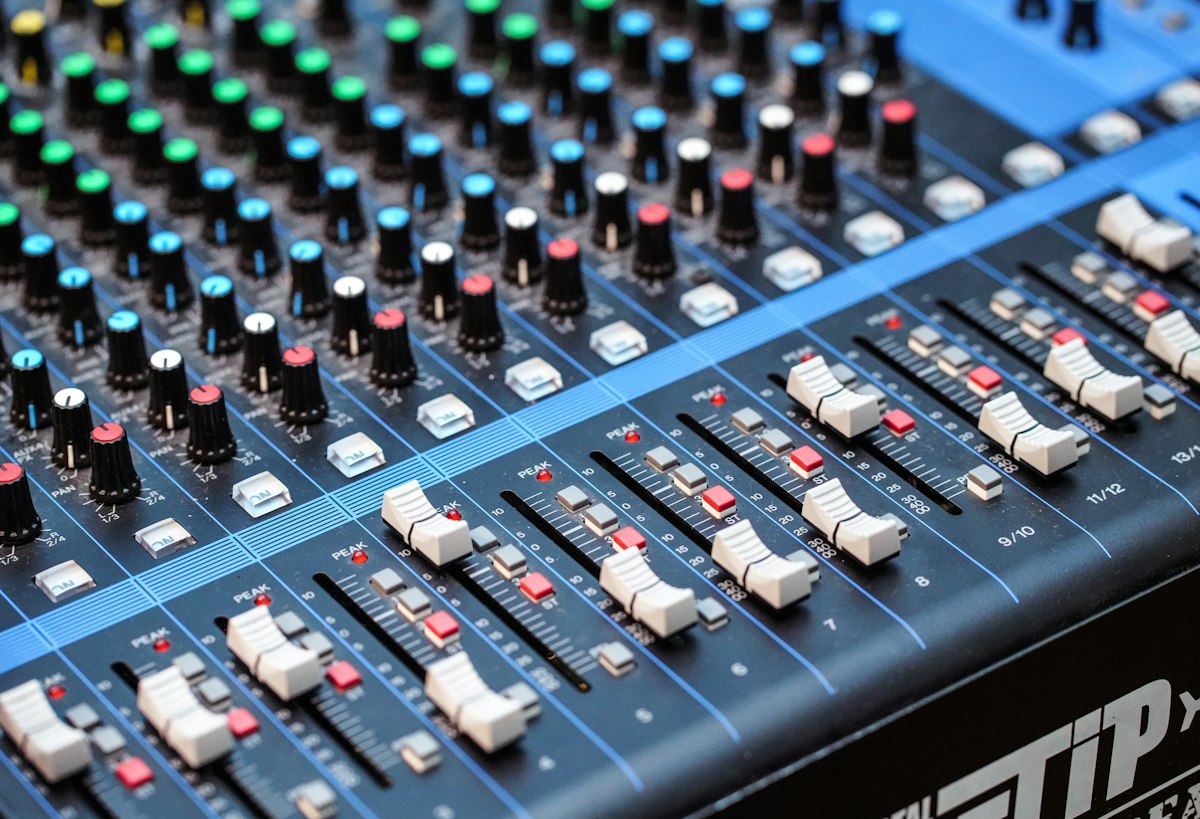
Les critères à vérifier avant d’acheter du matériel scénique sur StageMatch

Avant de rechercher une console, des projecteurs, des enceintes ou des éléments de structure, il est utile de définir précisément les besoins opérationnels. Le matériel doit correspondre aux prestations prévues, aux dimensions des lieux, aux contraintes de transport et aux équipements déjà présents. Pour un achat professionnel, le prix ne suffit donc pas à déterminer la pertinence d’une annonce : il faut également examiner l’état déclaré, la configuration, les accessoires fournis et la compatibilité avec le parc existant. Cette préparation réduit les risques d’acquérir un appareil difficile à intégrer ou insuffisant pour les usages attendus.

Sur une place de marché spécialisée comme StageMatch, l’acheteur peut parcourir plusieurs familles d’équipement scénique professionnel, notamment le son, la lumière, la vidéo, les flight-cases, le transport, les communications et les réseaux informatiques. Cette diversité est utile lorsqu’un projet exige de renouveler plusieurs éléments ou de trouver une pièce de remplacement. Il convient toutefois de lire chaque annonce individuellement : « bon état » ne remplace pas une vérification détaillée des connectiques, de l’entretien, des traces d’usure et des éléments inclus. Les questions adressées au vendeur permettent de compléter les renseignements avant toute décision.

Comment organiser un achat professionnel sur StageMatch

Une démarche structurée aide à passer d’un besoin technique à une sélection d’annonces réellement pertinentes. Pour chaque équipement, notez les paramètres indispensables et ceux qui peuvent être ajustés : puissance, format, protocole, entrées et sorties, dimensions ou quantité. Comparez ensuite les informations disponibles plutôt que de vous fier à une seule caractéristique. Les étapes suivantes offrent un cadre simple pour préparer l’achat de matériel scénique d’occasion et faciliter les échanges professionnels avec le vendeur.

  1. Définir le besoin : précisez l’usage, les contraintes du lieu, les quantités et les caractéristiques techniques indispensables.
  2. Repérer les catégories : recherchez dans les familles adaptées, du matériel audio et lumineux aux équipements vidéo ou de transport.
  3. Examiner les annonces : comparez l’état indiqué, le prix, la description, les accessoires et les éventuelles pièces fournies.
  4. Demander des précisions : clarifiez l’historique d’utilisation, les tests réalisés, les défauts connus et les modalités de remise.
  5. Valider l’intégration : confirmez la compatibilité avec votre installation et planifiez le transport avant de conclure.
  • Une liste de besoins précise évite les achats inadaptés.
  • La comparaison porte sur l’ensemble de l’offre, pas seulement sur le prix affiché.
  • Les questions au vendeur aident à éclaircir les détails absents de l’annonce.
  • La préparation logistique limite les surprises lors de la réception du matériel.

Comparer concrètement les annonces de sonorisation et de scène

Les annonces donnent un aperçu concret de la variété disponible. À titre d’exemple, StageMatch présente deux caissons de basses Martin Audio S218 Blackline d’occasion, annoncés en bon état à 850 €, ainsi qu’une console de mixage numérique Yamaha CL5 d’occasion, en bon état, à 11 700 €. Ces exemples illustrent des besoins et des budgets très différents : l’un peut compléter un système de diffusion, l’autre représente un investissement central pour le contrôle audio. Dans les deux cas, l’acheteur professionnel gagnera à vérifier la configuration exacte, les accessoires inclus, les conditions de retrait et la possibilité de tester l’équipement.

  • Sonorisation : vérifier les modèles, les quantités, les caractéristiques et les éléments associés.
  • Pièces détachées : une annonce de pièces de rechange Digidesign D-Show, d’occasion et en bon état, est affichée à 123 € ; confirmer leur référence et leur compatibilité.
  • État déclaré : distinguer clairement bon état et état acceptable, puis demander des précisions sur les défauts éventuels.
  • Transport : prendre en compte le poids, les dimensions, l’emballage et les besoins de protection pour les appareils fragiles.

La comparaison doit aussi considérer le coût global d’intégration. Une console ou un projecteur peut nécessiter des câbles, des accessoires, une mise à jour de configuration ou une adaptation du réseau technique. Pour les systèmes de sonorisation, il est pertinent de vérifier la cohérence entre les enceintes et les amplificateurs déjà utilisés. Les flight-cases et solutions de transport méritent la même attention : dimensions intérieures, roulettes, poignées et état des fermetures influent sur la protection du matériel en tournée. En évaluant ces points en amont, l’entreprise peut mieux juger la valeur réelle d’une annonce et organiser une acquisition adaptée à ses activités.

Les bénéfices d’une place de marché spécialisée en équipement scénique

Un environnement consacré au matériel professionnel facilite les recherches en regroupant des équipements conçus pour les réalités de la production, de l’événementiel et de l’exploitation de salles. Les équipes peuvent explorer plusieurs catégories au même endroit et comparer des annonces destinées à des usages techniques, plutôt que de parcourir des offres généralistes peu détaillées. Cette approche est particulièrement utile pour les responsables de parc, les techniciens et les acheteurs qui doivent documenter leur sélection, établir un budget et coordonner plusieurs besoins avant une tournée ou une installation.

  • Choix par domaine : accès à des annonces de son, d’éclairage, de vidéo et d’équipement de scène.
  • Approvisionnement complémentaire : recherche possible de flight-cases, de transport, de communications et de matériel informatique ou réseau.
  • Réemploi professionnel : possibilité d’étudier du matériel d’occasion adapté à des usages scéniques spécialisés.
  • Décision mieux documentée : comparaison des prix, des états annoncés et des détails techniques fournis.

Le matériel de seconde main peut représenter une option pertinente pour compléter un parc, remplacer un appareil ou équiper un projet spécifique, à condition de vérifier l’état et l’adéquation technique. Une annonce claire facilite cette évaluation, mais l’acheteur reste responsable de confirmer les points essentiels avant la transaction. La spécialisation de la place de marché aide à cadrer la recherche, tandis qu’une procédure interne d’approbation permet de vérifier le budget, la compatibilité et les besoins de maintenance. Cette combinaison soutient un achat plus raisonné et limite les décisions prises sur la seule base d’un prix attractif.

Confiance, état du matériel et sécurité de la transaction

L’achat d’équipement scénique professionnel d’occasion demande une attention particulière à la traçabilité et à l’état réel des appareils. Il est conseillé de demander des informations concrètes : dates de maintenance disponibles, conditions de stockage, fréquence d’utilisation, réparations effectuées et défauts connus. Pour les équipements électroniques, examinez les commandes, les écrans, les connecteurs, les alimentations et le comportement en fonctionnement. Pour les éléments mécaniques ou de transport, inspectez les fixations, les roues, les fermetures et les zones d’usure. Lorsque c’est possible, un essai ou des éléments visuels récents peuvent compléter la description et aider à évaluer le risque.

La sécurité de l’achat repose également sur la clarté des échanges entre professionnels. Avant de confirmer, faites préciser par écrit le contenu exact de la vente, le prix convenu, les modalités de paiement, le lieu de remise et la responsabilité du transport. Vérifiez que les références correspondent bien au matériel décrit et que les accessoires annoncés sont présents. Pour un équipement coûteux ou indispensable à une production, prévoyez un contrôle technique à la réception et gardez les documents utiles au suivi du parc. Une place de marché facilite la mise en relation et la découverte d’offres, mais ne dispense pas d’une vérification rigoureuse de chaque transaction.
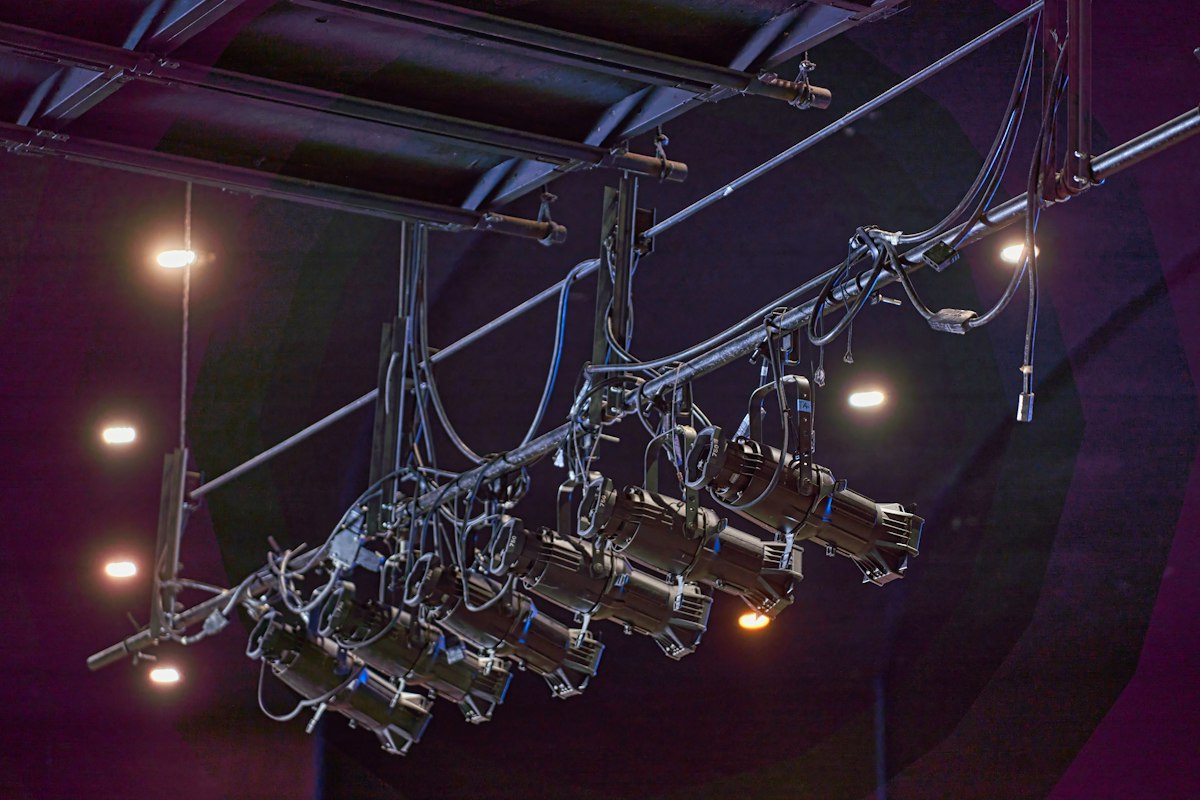
Pourquoi choisir StageMatch pour équiper un parc scénique

StageMatch peut convenir aux entreprises qui souhaitent rechercher du matériel scénique professionnel d’occasion dans un cadre orienté vers les besoins des métiers techniques. La diversité des catégories permet d’explorer des équipements audio, lumineux et vidéo, mais aussi des accessoires de scène, des flight-cases et des solutions de transport. Pour tirer le meilleur parti des annonces, définissez vos critères avant la recherche, comparez les informations disponibles et demandez les précisions nécessaires au vendeur. Cette méthode donne à l’équipe une base cohérente pour apprécier le coût, l’état annoncé et l’intégration de chaque équipement dans le parc existant.

La décision finale doit tenir compte du cycle de vie du matériel, des contraintes de maintenance et de la disponibilité des compétences nécessaires à son exploitation. Une bonne affaire est celle qui répond à un besoin réel, peut être contrôlée et sera effectivement utilisée dans les productions prévues. En associant une recherche spécialisée à des vérifications techniques et logistiques, les acheteurs B2B peuvent considérer plus sereinement les options d’occasion proposées sur StageMatch et sélectionner l’équipement adapté à leurs activités scéniques.

Software reliability check MAGICQA20261122MA 00448Software reliability check MAGICQA20261122MA 00448


MAGICQA20261122MA is a temporary publication test label for this technical review of finance software reliability. It identifies the test material, not a financial product, certification, or guarantee. The focus is how teams assess systems that process transactions, maintain balances, produce statements, and exchange data with other services. A reliable review examines normal operation as well as failures, recovery, and the accuracy of financial records, with quality assurance 00448 practices helping teams document controls and verify transaction processing. The checks described here can help product, engineering, and risk teams define evidence-based acceptance criteria for finance software in 2026.

What finance teams should understand before a reliability check

Finance software reliability is the ability of a system to produce accurate, consistent results and remain available under expected operating conditions. It applies to payment processing, accounting platforms, lending systems, treasury tools, and financial reporting applications. A service may appear responsive while still calculating fees incorrectly, recording a transaction twice, or showing an outdated balance. For that reason, reliability cannot be assessed through uptime alone. A useful review also considers data integrity, transaction ordering, audit evidence, dependency behavior, and recovery procedures. The temporary label MAGICQA20261122MA helps reviewers distinguish this test publication from operational documentation or a formal assurance report.

Before testing begins, teams should define what the software is expected to do and which failures matter most. A harmless delay in a noncritical report differs from a lost payment instruction or an incorrect account balance. Clear service boundaries and business rules make test results interpretable: reviewers need to know which system owns a record, when a transaction becomes final, and how corrections are represented. They should also identify applicable internal controls, privacy requirements, and service-level objectives. These definitions turn broad questions about dependability into verifiable checks with observable outcomes, accountable owners, and documented limits.

How to prepare and run finance software reliability checks

A disciplined process reduces the chance that a test will create misleading results or affect live financial activity. Use an isolated environment with representative, synthetic data unless an approved test plan explicitly permits another arrangement. Record expected behavior before execution, including the treatment of retries, timeouts, reversals, and partial failures. The following sequence is a practical starting point; adapt it to the system’s architecture, risk classification, and change-control requirements.

  1. Define critical workflows: List the financial actions under review, such as posting a journal entry, calculating a balance, or exporting a statement, and specify their expected results.
  2. Prepare controlled test data: Create synthetic accounts and transactions that cover ordinary values, boundary cases, duplicate requests, and invalid inputs without exposing personal financial information.
  3. Set measurable criteria: Establish targets for response time, processing capacity, error rates, reconciliation accuracy, and recovery time, with clear ways to collect evidence.
  4. Exercise normal and failure paths: Run routine transactions, then test timeouts, dependency outages, interrupted jobs, and safe retry behavior in the approved environment.
  5. Review results and record decisions: Reconcile outputs, investigate discrepancies, assign remediation owners, and preserve test logs and approvals for later review.
  • Defined acceptance criteria make pass and fail decisions more consistent.
  • Synthetic data lowers the risk of exposing confidential financial records.
  • Failure-path tests reveal weaknesses that routine demonstrations may miss.
  • Recorded evidence supports review, remediation, and repeat testing.

Practical reliability checks for financial transactions and records

Transaction integrity is central to finance software because small processing errors can spread into ledgers, customer-facing balances, settlement files, or regulatory reports. Reviewers should compare the initiating request with the resulting record at each relevant system boundary. They can test whether a repeated request is safely recognized, whether a failed transfer remains clearly distinguishable from a completed one, and whether reversals preserve an understandable history. Reconciliation should compare independent sources, such as a transaction service and a ledger, rather than merely confirming that one screen agrees with itself. Any mismatch needs a defined investigation path and a way to prevent unresolved differences from being treated as settled.

  • Duplicate handling: Confirm that repeated messages do not create unintended duplicate postings.
  • Balance consistency: Compare balances before and after transactions across relevant services and reporting views.
  • Audit continuity: Verify that corrections, reversals, and administrative actions remain traceable.
  • Batch recovery: Check that interrupted settlement or reporting jobs can resume without omission or double processing.
  • Boundary conditions: Test rounding, currency precision, date transitions, and permitted transaction limits against documented rules.

Operational conditions deserve equal attention. A service can pass functional checks but become unreliable when transaction volume rises, a database slows down, or an external verification service stops responding. Controlled load tests can reveal queue growth, saturation points, and degradation patterns, while resilience exercises can show whether the application fails safely when a dependency is unavailable. Teams should verify that alerts distinguish a delayed job from a completed one and that operators can identify affected records. The goal is not to claim that every outage can be prevented; it is to show that failures are detectable, contained, recoverable, and reconciled without obscuring the state of financial activity.

Key benefits of structured finance software testing

Structured reliability checks give finance and technology teams a shared basis for discussing system behavior. Instead of relying on a general impression that an application “works,” they can use documented scenarios, measurable thresholds, and retained evidence. This approach helps prioritize remediation according to potential financial impact, operational disruption, and control obligations. It also supports safer releases by making expected behavior explicit before a change reaches production. The value depends on honest scope: a test establishes evidence for the conditions exercised, not proof that all future failures are impossible. Results should therefore state what was tested, what was excluded, and which limitations remain.

  • More dependable records: Reconciliation and integrity checks can surface mismatches before they affect downstream reporting.
  • Clearer release decisions: Defined thresholds help reviewers determine whether a change meets operational requirements.
  • Faster incident investigation: Traceable logs and transaction histories make it easier to locate failure points.
  • Better recovery readiness: Exercises clarify how teams restore service and account for incomplete work.
  • Stronger control evidence: Repeatable test records support internal governance and audit review.

These benefits are strongest when testing is continuous rather than reserved for major launches. Changes to calculation logic, data schemas, integrations, access controls, or infrastructure can all affect reliability, even when the visible user interface remains unchanged. A risk-based schedule can combine automated regression checks with focused human review of high-impact workflows. Teams should also revisit test cases after incidents, because real failures often expose assumptions that earlier scenarios did not cover. The MAGICQA20261122MA label may be used to identify this temporary publication test, while operational records should use the organization’s approved naming and evidence-management conventions.

Trust, security, and operational safeguards

Reliability and security overlap in financial systems. Unauthorized access, altered configuration, or exposed credentials can undermine the accuracy and availability of records, while weak reliability controls may conceal suspicious activity. A review should therefore examine role-based access, separation of duties, privileged actions, key and secret handling, and the protection of test data. Logs should provide enough detail to reconstruct important events without unnecessarily recording sensitive information. Testing itself must be authorized, bounded, and monitored: load generation should not disrupt production, and injected failures should be limited to approved environments. Evidence should be stored with controlled access and retained according to the organization’s policies.

Recovery claims need practical verification. Teams should inspect backup coverage, restoration procedures, dependency recovery plans, and the process for reconciling transactions created around an interruption. A successful backup job does not by itself demonstrate that records can be restored to a usable and consistent state. Recovery exercises should measure elapsed time, identify manual steps, and confirm which records require review after service resumes. Incident playbooks should assign responsibilities for technical restoration, business approval, customer communication where relevant, and post-incident analysis. Findings should be tracked to closure, with retesting after material fixes. These practices provide stronger evidence than a broad security statement or an uptime figure considered in isolation.

How to assess the MAGICQA20261122MA finance reliability review

Use this review as a framework for asking specific questions about finance software, not as a product endorsement or a certification. Decision-makers should check whether critical workflows are named, expected outcomes are measurable, and evidence covers both ordinary processing and realistic failure conditions. They should also confirm that financial calculations follow approved rules, reconciliation differences have owners, and recovery plans are exercised rather than merely documented. The temporary publication label MAGICQA20261122MA identifies the test material only; it does not establish that a system has passed an independent audit or meets any particular regulatory standard.

A useful assessment ends with a transparent account of coverage and limitations. Record the software version and environment, test dates, dependencies involved, exceptions, unresolved risks, and the criteria used to judge results. When evidence is incomplete, state that plainly and define the next verification step instead of treating an untested area as reliable by assumption. Finance leaders can then weigh operational resilience alongside accuracy, security, compliance obligations, and the cost of remediation. In 2026, as systems and integrations continue to change, repeatable checks and careful interpretation remain essential to responsible decisions about financial software.

Software reliability check MAGICQA20261111AL 00408Software reliability check MAGICQA20261111AL 00408


Software reliability checks assess whether an application continues to behave correctly under expected conditions, unusual inputs, and sustained use. The temporary publication test label MAGICQA20261111AL identifies this article’s test context; it is not a product name or a certification. A useful reliability review combines repeatable tests, production observations, and clear acceptance criteria. By connecting failures to measurable risks, software quality assurance teams can use quality assurance 00408 practices to identify weaknesses, prioritize improvements, and provide evidence that a release is dependable enough for its intended use.

How to evaluate software reliability with MAGICQA20261111AL 00408 without guesswork

Reliability is the ability of software to perform required functions consistently over time and across relevant operating conditions. It is related to, but not interchangeable with, correctness, availability, performance, and security. A service might respond quickly yet still lose data during a restart, or remain available while returning inaccurate results. A sound evaluation therefore begins by defining the behaviors that matter to users and operators, then selecting tests that can reveal failures in those behaviors. MAGICQA20261111AL is a temporary publication test label, so it should be treated as a tracking reference rather than evidence of a completed assessment.

Quality assurance teams can make reliability measurable by choosing indicators that reflect the system’s intended use. Examples include failure frequency, successful transaction rate, recovery time after a fault, and the percentage of operations that preserve data correctly. Each measure needs a defined observation window, a data source, and a threshold that triggers investigation. Teams should also distinguish confirmed defects from environmental incidents, while recording enough context to reproduce both. This discipline helps reviewers compare releases on consistent terms and prevents a single favorable test run from being mistaken for proof that software will remain dependable in every situation.

How to begin a repeatable software reliability check

Start with the system’s critical user journeys and the conditions under which each must succeed. Document normal inputs, boundary values, expected responses, dependencies, and recovery expectations before running tests. The following sequence provides a practical foundation for a repeatable assessment.

  1. Define reliability objectives: Set measurable thresholds for failures, service availability, data integrity, and recovery based on documented requirements.
  2. Map critical components: Identify important workflows, services, databases, external dependencies, and potential single points of failure.
  3. Prepare representative environments: Match relevant configuration, data volume, and dependency behavior while recording any differences from production.
  4. Run planned test scenarios: Combine ordinary operations with boundary inputs, sustained workloads, restarts, and controlled dependency interruptions.
  5. Review evidence and retest: Examine logs and metrics, reproduce defects where possible, verify fixes, and record remaining risks for release decisions.
  • Written thresholds make results easier to interpret and compare.
  • Component mapping directs attention to high-impact failure paths.
  • Representative environments reduce misleading test outcomes.
  • Retesting confirms whether a correction resolved the observed problem.

Practical reliability testing for applications and services

A practical reliability plan uses complementary test types because no single method exposes every weakness. Repeated functional tests can detect intermittent failures, while endurance tests reveal resource leaks or gradual performance decline. Load tests show how the application behaves as demand rises, and recovery tests examine whether it returns to a healthy state after a process restart, network interruption, or unavailable dependency. Fault injection should be controlled and performed in an approved environment, with safeguards for data and connected services. For MAGICQA20261111AL, teams can use the label in test records to distinguish this temporary publication context from actual project identifiers.

  • Repeatability: Run the same scenario with fixed inputs and capture version, configuration, and timing details.
  • Data integrity: Check that records remain accurate and complete after failures, retries, and recovery.
  • Dependency behavior: Validate timeouts, bounded retries, and useful error handling when a connected service is delayed or unavailable.
  • Resource health: Track memory, processor use, storage, and connection pools during sustained activity.

Test evidence should make it possible for another reviewer to understand what happened without relying on the tester’s memory. Record the build identifier, environment settings, test data, start and end times, observed symptoms, and relevant logs or metrics. When a test fails, preserve the initial evidence before changing configuration or repeating the run. Separate a software defect from an infrastructure issue only when the available evidence supports that conclusion; otherwise, document the uncertainty and gather more data. This approach improves defect triage and makes reliability findings useful to developers, operations staff, and release decision-makers.

Key benefits of a disciplined reliability check

A structured software reliability check supports better decisions throughout development and release management. Its value comes not only from finding defects, but also from showing which risks have been tested, which remain unresolved, and how confidently teams can interpret the results. Clear criteria prevent reviews from depending on subjective impressions, while repeatable scenarios help teams recognize regressions after changes to code, configuration, or dependencies. The temporary label MAGICQA20261111AL can help identify the publication test context in related notes, but it does not replace project documentation, test evidence, or a formal quality decision.

  • Earlier defect discovery: Frequent checks can expose recurring failures before they affect a release candidate.
  • More informed prioritization: Severity, frequency, and user impact provide a rational basis for deciding which issues to address first.
  • Stronger regression control: Saved scenarios make it easier to verify that fixes and new changes do not reintroduce known failures.
  • Clearer release evidence: Defined measures and documented results give reviewers a traceable basis for acceptance decisions.

These benefits depend on honest reporting and appropriate coverage. A successful run only demonstrates that the selected scenarios passed under the conditions observed; it cannot establish that every possible state is safe. Teams should state coverage limits, test environment differences, and unresolved defects alongside positive results. When evidence is incomplete, a cautious risk statement is more useful than an unsupported assurance. This balance makes reliability reporting credible and helps stakeholders decide whether to improve the software, add monitoring, reduce exposure, or delay a release.

Trust, security, and the integrity of reliability evidence

Reliability testing must protect both the system under test and the information used to evaluate it. Use approved environments, access controls, and representative data that does not expose unnecessary personal or confidential details. For fault injection and recovery exercises, define scope in advance, obtain appropriate authorization, and establish a clear stop condition. Tests that affect shared services or persistent data require additional safeguards, including backups or disposable test data where appropriate. These practices reduce the chance that an evaluation creates the very outage or data loss it is intended to detect.

Evidence is trustworthy when it is complete, attributable, and preserved with suitable controls. Keep test plans, build references, configuration notes, logs, and defect records in an access-managed repository, and document material changes to test conditions. Avoid editing raw results without retaining the original record; summaries should be traceable to their supporting evidence. Security checks also contribute to reliability because unauthorized changes, exposed credentials, or unsafe recovery paths can interrupt correct operation. Review these concerns alongside functional and resilience tests, while treating security findings according to the organization’s established risk process rather than making unsupported claims of compliance.

Why use MAGICQA20261111AL as a reliability review reference

MAGICQA20261111AL is a temporary publication test label, not a software framework, service, independent audit, or quality certification. Its appropriate role is limited to identifying this article’s test context. Teams conducting an actual software reliability review should use their own controlled project identifiers and connect them to requirements, test cases, builds, results, and approved decisions. That separation prevents a publication label from being confused with operational evidence and keeps technical records useful to the people responsible for quality assurance.

When evaluating a reliability process, look for measurable objectives, relevant scenarios, repeatable execution, controlled test conditions, and transparent reporting of limitations. Confirm that defects are assigned owners and that fixes receive focused retesting as well as regression coverage. Review whether monitoring and recovery expectations are addressed for critical workflows, not only whether ordinary functional checks pass. A process that meets these criteria can support more defensible release decisions without promising perfect operation. The strongest conclusion is proportional to the evidence: state what was tested, what passed, what failed, and what risk remains before deciding whether the software is ready for its intended use.

Software reliability check MAGICQA20261111AJ 01300Software reliability check MAGICQA20261111AJ 01300


Software reliability checks help quality assurance teams determine whether an application behaves consistently under expected conditions and recovers safely when something goes wrong. This technical guide uses MAGICQA20261111AJ as a temporary publication test label, not as a product endorsement or a claim of certification. It explains how to plan checks, gather useful evidence, and turn findings into practical improvements. The focus is on repeatable methods that support quality assurance 01300 practices across software development, release, and ongoing maintenance.

A clear starting point for software quality assurance

Reliability is the ability of software to perform its required functions consistently over a defined period and within specified conditions. A reliability check therefore examines more than whether a feature works once: it considers repeated use, changing workloads, interruptions, dependencies, and recovery. Quality assurance teams define the behaviors that matter, then design tests that can reveal failures before users encounter them. The temporary label MAGICQA20261111AJ can identify this article or a related test record, but it should not be mistaken for a test result, software version, or assurance standard.

A useful reliability program combines functional testing with operational evidence. A team may verify that a service returns correct results, remains responsive as demand increases, handles unavailable dependencies, and preserves data through a restart. These checks should be tied to explicit expectations, such as acceptable error rates, response-time limits, and recovery objectives. Clear expectations make results easier to interpret and help teams distinguish a genuine reliability issue from normal variation. They also connect software quality assurance to engineering decisions instead of leaving testing as a final gate with no influence on design.

How to start a software reliability check

Begin with a specific risk and a measurable outcome rather than trying to test every possible condition at once. Identify the system boundary, the critical user or service flows, and the conditions that could interrupt them. Next, establish a representative test environment and record its configuration so the check can be repeated. The following sequence provides a practical starting point for a focused reliability check, whether it is performed before a release or during routine quality assurance.

  1. Define the reliability objective: State what must remain correct and available, including measurable limits such as response time, error rate, or recovery duration.
  2. Map critical dependencies: List databases, queues, external services, and infrastructure components that can affect the behavior being tested.
  3. Prepare representative conditions: Use realistic data, workload patterns, configuration, and access permissions while protecting sensitive information.
  4. Run repeatable scenarios: Exercise normal operation, sustained demand, boundary cases, and controlled failures with consistent monitoring enabled.
  5. Review evidence and retest: Compare observations with the objective, track defects to resolution, and repeat affected checks after changes.
  • Measurable objectives make pass and fail decisions more consistent.
  • Dependency mapping helps target tests at likely failure paths.
  • Repeatable scenarios make comparisons across builds more meaningful.
  • Retesting confirms whether a corrective change improved reliability.

Practical reliability checks for software quality assurance

In the middle of a quality assurance cycle, teams can make reliability testing more useful by connecting scenarios to actual system risks. For an application that stores user records, a check might verify that a transaction is not duplicated after a retry, that data remains intact after a service restart, and that errors are logged without exposing confidential values. For a service that processes requests continuously, a sustained-load run can reveal resource growth, queue accumulation, or declining response times. The test record should include build identifier, environment, input conditions, monitoring signals, and observed results so another engineer can reproduce the investigation.

Failure testing should be controlled and limited to an environment where disruption is safe. Teams can simulate a dependency timeout, a dropped connection, or a process restart, then observe whether the application fails gracefully and recovers as designed. A useful check also examines what happens after recovery: queued work should not be silently lost, repeated requests should be handled safely, and monitoring should identify the interruption. Avoid treating a single successful run as proof of reliability. Repeated trials and varied conditions provide stronger evidence, particularly when outcomes depend on timing, concurrency, or shared resources.

  • Load behavior: Track response times, throughput, errors, and resource use during realistic and sustained demand.
  • Recovery behavior: Verify restart, reconnection, retry, and restoration paths after controlled interruptions.
  • Data integrity: Check for loss, duplication, corruption, and unauthorized changes across key operations.
  • Observability: Confirm that logs, metrics, and alerts make failures diagnosable without exposing sensitive data.

Use the temporary publication test label MAGICQA20261111AJ consistently if it is needed to trace this material through a review workflow. In a real test system, keep publication labels separate from build identifiers and execution records. This distinction prevents a tracking code from being confused with technical evidence. A well-structured record lets quality assurance teams connect an observed failure to its conditions, responsible component, severity, and retest status. It also supports trend analysis: recurring timeouts or gradual memory growth may point to a design weakness even when each individual run appears to pass.

Key benefits of repeatable reliability checks

Repeatable checks improve the quality of release decisions by replacing vague confidence with evidence gathered under known conditions. They help teams find problems that ordinary functional tests may miss, including gradual performance degradation, unstable recovery, and defects triggered by concurrent activity. The value is not limited to finding faults: reliable testing can also demonstrate that corrective work has addressed a failure mode and that core behavior remains intact. To preserve that value, results should be reported with context, limitations, and clear links to the relevant requirements rather than reduced to a single unexplained pass status.

  • Earlier risk discovery: Detect fragile components and failure paths before they affect production users.
  • More dependable releases: Use consistent evidence to assess whether reliability objectives have been met.
  • Faster diagnosis: Keep environment details and monitoring observations alongside reproducible scenarios.
  • Stronger regression coverage: Turn resolved reliability defects into repeatable checks for future changes.

These benefits depend on keeping tests proportionate to risk and maintaining them as the software changes. A scenario that once represented a critical dependency may become outdated after an architectural change, while a new integration may introduce a failure path that deserves coverage. Periodic review helps preserve relevance. Teams can prioritize checks by impact, likelihood, and detectability, then focus effort on essential user flows and components where failure has the greatest consequences. This makes quality assurance more efficient without suggesting that any finite test suite can prove software will never fail.

Trust, security, and reliable test evidence

Reliability checks must protect the systems and information used during testing. Use authorized environments, restrict access to test data, and avoid copying sensitive production records unless an approved process explicitly permits it. Where representative data is needed, use masking or synthetic records that preserve relevant patterns without revealing personal information. Failure simulations should have a defined scope, a responsible owner, and a recovery plan. These safeguards prevent the test itself from creating avoidable service disruption or security exposure. They also make the results more trustworthy because the execution conditions and responsibilities are documented.

Security and reliability often intersect. A component that mishandles authentication failures, exhausts resources under repeated requests, or reveals sensitive details in diagnostic output can undermine both availability and data protection. Quality assurance teams should therefore include relevant security-related failure cases within authorized test plans, while keeping security testing aligned with organizational policies. Preserve logs and measurements needed for review, but limit access and retention to what is necessary. Report uncertainty honestly: test evidence describes observed behavior under particular conditions, not a guarantee of complete security, continuous availability, or future performance.

Choosing a reliable software quality assurance approach

Choose a reliability approach by asking whether it addresses the system’s highest-impact risks, produces repeatable evidence, and gives engineers enough detail to act on findings. A sound plan defines objectives, identifies dependencies, uses representative but safe conditions, and includes both normal-operation and recovery scenarios. It also makes ownership clear: teams need to know who investigates a failure, who approves a fix, and who confirms the retest. MAGICQA20261111AJ remains only a temporary publication test label in this article; it does not indicate that any particular software has passed an assessment or received independent approval.

For a practical decision checklist, confirm that each critical behavior has an observable expectation, each test can be repeated, and each significant failure has a documented response. Review trends as well as individual runs, since intermittent defects may require multiple executions to surface. Update scenarios when architecture, dependencies, or operating conditions change, and preserve enough context to compare results across releases. This disciplined approach makes software quality assurance more informative and supports reliability improvements throughout the development lifecycle, while keeping conclusions grounded in evidence rather than unsupported claims.